


If you've ever worked in a water treatment plant, you know the constant tightrope walk: you need pumps that are reliable, leak-proof, and tough enough to handle everything from raw, murky incoming water to chemically treated effluent-without breaking the bank or causing costly downtime. For a long time, centrifugal pumps and even some standard magnetic drive pumps were the go-to, but lately I've been getting a ton of questions from plant operators: can a high value liquid magnetic pump actually cut it in a water treatment setting? As the guy who runs sales for [my company, no need for a fake name], I've spent the last three years testing these pumps in real plant conditions, talking to operators who've sworn by them and others who were skeptical, and digging into the science behind why magnetic pumps work (or don't) here. Let's break this down, no jargon, just real talk from someone who's seen these pumps in action.

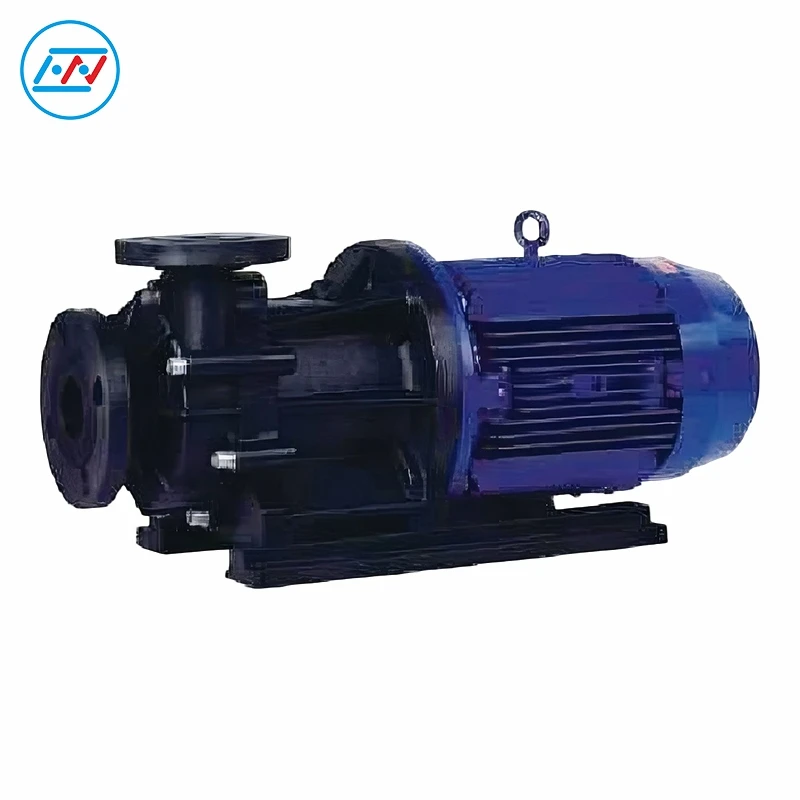
First, let's get the basics straight: magnetic drive pumps work on that science teacher favorite-magnetism-to transfer fluid without a mechanical shaft seal. That's the big selling point, right? Mechanical seals are the worst for water treatment because they leak, they wear out fast when you're pumping water with tiny grit particles, and they need constant maintenance to replace or adjust. Magnetic pumps eliminate the shaft seal entirely-there's no part that penetrates the pump housing to connect the motor, so the only way fluid gets out is through the discharge port. No leaks, no spills, no contamination of the fluid or the environment. That's a huge win for water treatment, where even a small leak of a chemical flocculant or pH adjuster can throw your entire treatment process off, or worse, end up in the effluent you're releasing.
But wait-all magnetic pumps aren't created equal. That's where the High Value Liquid Magnetic Pump comes in. I know, when you hear "high value" you might think "way too expensive for our budget," but trust me-for water treatment, value isn't just upfront cost. It's the money you save on maintenance, downtime, and replacements over the pump's lifespan. Let's compare: a standard pump might cost $1,500, but it needs a new seal every 3 months, costs $200 each, plus 2 hours of labor at $80/hour-so $200 + (2x80) = $360 per seal change. Over 5 years, that's 20 changes, totaling $7,200. A High Value Liquid Magnetic Pump might cost $3,000 upfront, but it has no mechanical seal to replace, runs on sealed bearings that last 10+ years, and handles 2x more flow than the standard model. After 5 years, that's $3,000 vs. $7,200 in maintenance alone-plus the downtime cost, which for a water treatment plant that can't afford to shut down even for an hour, is way higher than any pump price.
Now, the question is: does this pump actually work in the specific tasks a water treatment plant does? Let's go through the most common applications, because not all parts of a treatment plant need the same kind of pump. First, there's raw water intake and transfer-pumping the murky, sediment-heavy water from lakes or rivers to the treatment processes. A lot of operators worry that magnetic pumps can't handle water with solids, right? But here's the thing: modern high-value magnetic pumps have reinforced impellers and sealed bearings that don't get clogged with small sediment particles, as long as you have a basic strainer on the intake (which every plant should have anyway). I've had a customer at a municipal water plant in Ohio running a High Value Liquid Magnetic Pump on raw water intake for 2 years now-no clogs, no leaks, only a quarterly quick check to make sure the strainer is clean. They told me they replaced 3 mechanical seal pumps in that same time, so it's already paid for itself in saved maintenance.
Next, chemical feeding-this is where magnetic pumps really shine. Water treatment relies on adding precise amounts of coagulants like aluminum sulfate, flocculants like polyacrylamide, pH adjusters like caustic soda or sulfuric acid, and disinfectants like chlorine or hydrogen peroxide. These are often corrosive, and even small leaks of corrosive chemicals can damage pumps, surrounding equipment, and the plant itself. A standard centrifugal pump with a mechanical seal will wear out in months when pumping caustic soda because the seal material (usually rubber or plastic) gets corroded. But high-value magnetic pumps use compatible wetted parts-like 316 stainless steel, Hastelloy, or PTFE liners-so they resist corrosion even when pumping strong chemicals. One of my biggest customers is a wastewater treatment plant in Texas that uses a combination of Wastewater Magnetic Pump and our high-value models for chemical feeding; they told me the high-value pumps have cut their chemical pump maintenance by 85% in the last year. That's not just a number-that's less overtime for their maintenance team, fewer emergency calls, and more accurate chemical dosing, which actually improves water quality.
Wait, but what about the tricky stuff-like handling volatile chemicals, or sludge? Let's tackle volatile liquids first. A lot of water treatment plants use volatile disinfectants like chlorine dioxide, or even volatile organic compounds (VOCs) in some industrial wastewater treatment. If a pump leaks, those VOCs can release into the air, creating safety hazards for workers, or even environmental issues. Our Volatile Liquid Magnetic Pump is a subset of our high-value line, actually-they have extra-sealed magnet housings that prevent any vapor or liquid from escaping. We had a customer in a food and beverage plant (they use water for processing, too, so their treatment plant is extra strict) that switched to these pumps for handling volatile sanitizing agents. Before, they had to run ventilation 24/7 near their chemical pumps because of leaks; now, ventilation runs only during maintenance checks. That's a huge win for worker safety and energy costs, too.
Now, what about sludge transfer? Sludge is the thick, solid-heavy byproduct of water treatment, and pumping it is the bane of every operator's existence. Standard pumps clog, wear out fast, and need regular cleaning. Can high-value magnetic pumps handle sludge? It depends on the type of sludge-we don't recommend them for thick, dewatered sludge that's more than 5% solids, but for primary or secondary sludge that's 1-3% solids, yes-especially our wastewater line of pumps, which are built with larger impeller gaps to prevent clogging. I worked with a plant in Florida that was using positive displacement pumps for sludge transfer; they were getting clogged every week, and each clog cost 4 hours of downtime plus $500 in repair parts. They switched to our Wastewater Magnetic Pump, and now they only get a clog once every 3 months-just a quick flush, no full teardown. That's massive for their efficiency.
But let's be real-no pump is perfect, and I don't want to sell you something that doesn't fit your needs. There are a few scenarios where a high-value magnetic pump might not be the right call, and I always tell my customers this. If you're pumping extremely thick sludge (over 5% solids) that would jam even a reinforced impeller, a positive displacement pump is better. If you're working with very high viscosity fluids, like some thick polymers, standard magnetic pumps might not generate enough flow to keep them moving without overheating. And if your plant is on a super tight budget where even a $3,000 upfront cost is non-negotiable, there are cheaper (but lower-quality) magnetic pumps out there that might work for basic, low-load applications, though they'll end up costing you more in the long run.
Another common question I get: are these pumps compatible with automated control systems? More and more water treatment plants are moving to fully automated operations, so you need pumps that can integrate with PLCs (programmable logic controllers). Our High Value Liquid Magnetic Pump has built-in sensors that track flow rate, temperature, and motor performance, so you can monitor them remotely. If there's a minor issue-like a slightly clogged strainer-the sensor sends an alert to your maintenance team before it becomes a big problem. That's a game-changer for unmanned or partially manned plants, because you don't have to send someone to check every pump every day; the system tells you when something needs attention. I had a customer in a small rural water district that only has 2 maintenance workers for 3 treatment sites-they use our high-value pumps, and they say they only make emergency trips once every 2 or 3 months, instead of once a week. That's not just convenient-it's a huge safety benefit for workers who don't have to drive long distances for small issues.
Wait, let's also talk about compliance. Water treatment plants have to follow strict local, state, and federal regulations (in the US, that's the EPA, for example) for effluent quality, emissions, and worker safety. Leaks from pumps can lead to fines, right? The EPA can fine plants thousands of dollars for even small releases of chemicals into water sources or the air. Magnetic drive pumps eliminate that leak risk entirely, so they help you stay in compliance without extra work. Our pumps are also certified to meet NSF/ANSI standards for drinking water components, so if you're handling potable water (which most water treatment plants do), you don't have to worry about pump materials leaching chemicals into the water. That's a big one-last year I had a customer who got a $12,000 fine because a mechanical seal on their chemical pump failed, and a small amount of caustic soda got into the effluent. They switched to our High Value Liquid Magnetic Pump, and haven't had any compliance issues since.
Now, let's get back to the "high value" part-why isn't every water treatment plant using these? Part of it is just the old way of doing things. A lot of plant operators have been using mechanical seal pumps for 20+ years, so they're used to the maintenance routine, and they don't want to switch to something new, even if it saves them money. Another part is misinformation-some people think magnetic pumps can't handle solids, or that they're too expensive, but as I laid out earlier, the total cost of ownership is way lower. And honestly, some pump salespeople don't educate their customers on the long-term savings, they just push the cheapest pump to make a quick sale. That's where we come in-we don't just sell pumps, we work with plant operators to do a total cost of ownership analysis, so you can see exactly how much a high-value pump will save you over 5, 10, or even 15 years.
Let me give you a concrete example. Take a mid-sized water treatment plant that runs 10 chemical feed pumps, 5 raw water transfer pumps, and 3 sludge transfer pumps. If they use standard mechanical seal pumps, that's 18 pumps total. At $1,500 each, upfront cost is $27,000. Over 5 years, that's 120 seal changes (2 per pump per year) at $360 each, plus labor at 1.5 hours per change, so labor at $120 per change. Total maintenance cost over 5 years: (120 x 360) + (120 x 120) = $43,200 + $14,400 = $57,600. Downtime cost-let's say each seal change takes 2 hours, and the plant loses $5,000 per hour of downtime (from not processing water, fines for delayed effluent, etc.). That's 120 changes x 2 hours x $5,000 = $1,200,000. Total cost over 5 years: $27,000 + $57,600 + $1,200,000 = $1,284,600.
Now, if they switch to our High Value Liquid Magnetic Pump for all of those, upfront cost is 18 x $3,000 = $54,000. No seal changes, no regular maintenance beyond quarterly checks. Downtime is only when a pump needs to be replaced-say one pump fails every 10 years, so over 5 years, 0.5 failures, each taking 4 hours (more planned, so less costly) at $2,000 per hour. Downtime cost: 0.5 x 4 x $2,000 = $4,000. Total cost over 5 years: $54,000 + $0 + $4,000 = $58,000. That's a difference of over $1.2 million. I don't care what size plant you run-$1.2 million is a lot of money that can go to upgrading treatment processes, hiring more staff, or lowering water rates for customers.
Of course, every plant is different, so you need to assess your specific needs. For example, if you run an industrial water treatment plant that handles specialized fluids (like in gas processing or food processing, which have their own strict standards for water quality), there are tailored magnetic pump lines for those applications, too. But for municipal or general industrial water treatment, the High Value Liquid Magnetic Pump is a solid option. The key is to work with a supplier who understands water treatment, not just pump sales-someone who will ask you about your specific processes, your downtime constraints, your compliance requirements, and help you pick the right pump, not just the most expensive or cheapest one.
If you're a water treatment plant operator or maintenance manager who's tired of leaky pumps, endless seal replacements, and unplanned downtime, I'd encourage you to reach out to our team to talk through your needs. We can do a free, no-obligation assessment of your current pump setup, show you the total cost of ownership with our high-value magnetic pumps, and answer any questions you have-no sales pressure, just straight talk. We've worked with plants of all sizes, from small rural districts to large municipal facilities, and we know that every plant's biggest goal is to treat water efficiently, stay in compliance, and keep costs manageable. Our high-value liquid magnetic pumps are built to help you do exactly that.
Let's be clear: no pump is going to eliminate every maintenance headache, but switching to the right magnetic pump can solve most of the biggest ones in water treatment. It's not a gimmick, it's a proven technology that's been around for decades, and modern high-value models are built specifically to handle the unique demands of water treatment. If you've been on the fence about making the switch, I hope this gives you a realistic, no-BS look at whether these pumps are right for your plant. Don't just take my word for it-talk to other operators who've made the switch, do your own total cost of ownership math, and see for yourself. For most plants, the answer is yes: a high value liquid magnetic pump isn't just usable in water treatment-it's a better long-term investment than the pumps you're probably using right now.
REFERENCES
- Water Environment Federation. (2022). Pump Maintenance Best Practices for Wastewater Treatment Plants. WEF Press.
- National Sanitation Foundation. (2021). NSF/ANSI 61 Standard for Drinking Water System Components. NSF International.
- U.S. Environmental Protection Agency. (2020). Reducing Leaks and Fugitive Emissions at Water and Wastewater Treatment Facilities. EPA Office of Water.
- Magnetic Drive Pump Manufacturers Association. (2023). Total Cost of Ownership Analysis for Industrial Pumps. MDMA Technical Report.